There are many options available to traders who want to trade in the Nasdaq Futures Market. There are E, MNQ and micro equity index futures. All offer traders a way to get into the Nasdaq market without investing a huge amount of capital. These futures can also be traded on the short and long sides of the market. In addition, these futures can be traded 24 hours a day, making it possible to trade almost any time of the day.
CME Group provides exposure to the Nasdaq 100 index through E-mini Nasdaq options. This index is a modified capitalization-weighted index of the top 100 non-financial US large-cap companies. Because of the technology-focused nature of more than half these companies, this index is "tech heavy". These futures can be traded on CME Globex. This is an electronic trading platform. The E-mini Nasdaq futures contract trades at $5.00 per contract.
The Micro E-mini Nasdaq futures were launched by the CME Group in May of 2019. These futures are smaller than the full-size E-mini Nasdaq and require a lower financial commitment. They are also fully fungible with E-mini counterparts, offering traders more flexibility in position management.
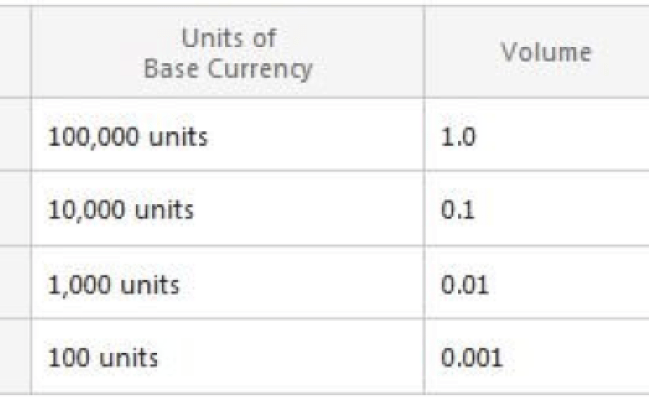
MNQ futures give traders an opportunity to trade both the long- and short-sides of the Nasdaq100. They are extremely popular with futures traders and can be traded electronically virtually 24 hours per day. Some traders use MNQ options to hedge their stock exposure. Others trade MNQ as a diversifier of their portfolios.
The Micro E-mini Nasdaq-100 futures were launched by the CME Group on May of this year. They are half the size of regular E-mini Nasdaq Futures. This gives traders a lower financial commitment and lower risk. The futures contract is $5 per contract and provides exposure to the Nasdaq 100 Index.
The Micro E-mini Nasdaq 100 index futures offer a great opportunity to participate in the Nasdaq futures markets. They provide traders with a low commitment and the chance to speculate on Nasdaq 100. These futures offer more flexibility in position management and trade nearly 24 hours a day, making it possible for traders to trade almost anywhere in the world.
CME Group has the Emini Nasdaq 100-100 contract. It is one of most in-demand contracts on this market. This contract is priced 20 times the Nasdaq 100 Index index. This means that the value of the contract will decrease as the value of the Nasdaq 100 increases. The multiplier for the E-mini Nasdaq futures is $20 per point. This multiplier may change in response to market conditions.
CME Group also offers the E-Mini Nasdaq 100 Index futures contracts. It is priced at $5 per contract and offers exposure to the E-Mini Nasdaq 100 index. This contract is deemed a fifth of the Nasdaq 100 Index futures contract and has a position limit of 10,000 equivalent contracts.
FAQ
What is a Stock Exchange, and how does it work?
A stock exchange is where companies go to sell shares of their company. This allows investors the opportunity to invest in the company. The market decides the share price. It is usually based on how much people are willing to pay for the company.
Investors can also make money by investing in the stock exchange. To help companies grow, investors invest money. They buy shares in the company. Companies use their money in order to finance their projects and grow their business.
Many types of shares can be listed on a stock exchange. Some of these shares are called ordinary shares. These are the most popular type of shares. These shares can be bought and sold on the open market. Stocks can be traded at prices that are determined according to supply and demand.
Other types of shares include preferred shares and debt securities. When dividends are paid, preferred shares have priority over all other shares. The bonds issued by the company are called debt securities and must be repaid.
Why is it important to have marketable securities?
An investment company exists to generate income for investors. It does so by investing its assets across a variety of financial instruments including stocks, bonds, and securities. These securities have certain characteristics which make them attractive to investors. They can be considered safe due to their full faith and credit.
Marketability is the most important characteristic of any security. This refers primarily to whether the security can be traded on a stock exchange. If securities are not marketable, they cannot be purchased or sold without a broker.
Marketable securities include government and corporate bonds, preferred stocks, common stocks, convertible debentures, unit trusts, real estate investment trusts, money market funds, and exchange-traded funds.
These securities are preferred by investment companies as they offer higher returns than more risky securities such as equities (shares).
What are some advantages of owning stocks?
Stocks are more volatile that bonds. When a company goes bankrupt, the value of its shares will fall dramatically.
The share price can rise if a company expands.
Companies often issue new stock to raise capital. This allows investors to purchase additional shares in the company.
Companies can borrow money through debt finance. This allows them to borrow money cheaply, which allows them more growth.
Good products are more popular than bad ones. The stock will become more expensive as there is more demand.
The stock price should increase as long the company produces the products people want.
Are bonds tradeable?
The answer is yes, they are! Bonds are traded on exchanges just as shares are. They have been doing so for many decades.
You cannot purchase a bond directly through an issuer. They can only be bought through a broker.
This makes it easier to purchase bonds as there are fewer intermediaries. This means that you will have to find someone who is willing to buy your bond.
There are several types of bonds. While some bonds pay interest at regular intervals, others do not.
Some pay interest annually, while others pay quarterly. These differences make it possible to compare bonds.
Bonds are great for investing. In other words, PS10,000 could be invested in a savings account to earn 0.75% annually. You would earn 12.5% per annum if you put the same amount into a 10-year government bond.
You could get a higher return if you invested all these investments in a portfolio.
Is stock marketable security a possibility?
Stock is an investment vehicle that allows investors to purchase shares of company stock to make money. You do this through a brokerage company that purchases stocks and bonds.
You could also choose to invest in individual stocks or mutual funds. There are more mutual fund options than you might think.
These two approaches are different in that you make money differently. Direct investment is where you receive income from dividends, while stock trading allows you to trade stocks and bonds for profit.
In both cases you're buying ownership of a corporation or business. If you buy a part of a business, you become a shareholder. You receive dividends depending on the company's earnings.
Stock trading allows you to either short-sell or borrow stock in the hope that its price will drop below your cost. Or you can hold on to the stock long-term, hoping it increases in value.
There are three types: put, call, and exchange-traded. Call and put options allow you to purchase or sell a stock at a fixed price within a time limit. ETFs can be compared to mutual funds in that they do not own individual securities but instead track a set number of stocks.
Stock trading is a popular way for investors to be involved in the growth of their company without having daily operations.
Stock trading is not easy. It requires careful planning and research. But it can yield great returns. This career path requires you to understand the basics of finance, accounting and economics.
How do I invest on the stock market
Brokers allow you to buy or sell securities. Brokers buy and sell securities for you. Brokerage commissions are charged when you trade securities.
Banks typically charge higher fees for brokers. Banks offer better rates than brokers because they don’t make any money from selling securities.
To invest in stocks, an account must be opened at a bank/broker.
If you use a broker, he will tell you how much it costs to buy or sell securities. This fee will be calculated based on the transaction size.
Your broker should be able to answer these questions:
-
the minimum amount that you must deposit to start trading
-
Are there any additional charges for closing your position before expiration?
-
What happens when you lose more $5,000 in a day?
-
How long can positions be held without tax?
-
How much you can borrow against your portfolio
-
Transfer funds between accounts
-
How long it takes transactions to settle
-
The best way to sell or buy securities
-
How to avoid fraud
-
How to get help when you need it
-
If you are able to stop trading at any moment
-
If you must report trades directly to the government
-
Reports that you must file with the SEC
-
whether you must keep records of your transactions
-
What requirements are there to register with SEC
-
What is registration?
-
How does it affect me?
-
Who needs to be registered?
-
When should I register?
How Do People Lose Money in the Stock Market?
The stock market does not allow you to make money by selling high or buying low. It's a place where you lose money by buying high and selling low.
The stock exchange is a great place to invest if you are open to taking on risks. They may buy stocks at lower prices than they actually are and sell them at higher levels.
They hope to gain from the ups and downs of the market. They might lose everything if they don’t pay attention.
Statistics
- For instance, an individual or entity that owns 100,000 shares of a company with one million outstanding shares would have a 10% ownership stake. (investopedia.com)
- The S&P 500 has grown about 10.5% per year since its establishment in the 1920s. (investopedia.com)
- US resident who opens a new IBKR Pro individual or joint account receives a 0.25% rate reduction on margin loans. (nerdwallet.com)
- Our focus on Main Street investors reflects the fact that American households own $38 trillion worth of equities, more than 59 percent of the U.S. equity market either directly or indirectly through mutual funds, retirement accounts, and other investments. (sec.gov)
External Links
How To
How to Invest Online in Stock Market
One way to make money is by investing in stocks. There are many ways you can invest in stock markets, including mutual funds and exchange-traded fonds (ETFs), as well as hedge funds. Your investment strategy will depend on your financial goals, risk tolerance, investment style, knowledge of the market, and overall market knowledge.
First, you need to understand how the stock exchange works in order to succeed. Understanding the market and its potential rewards is essential. Once you know what you want out of your investment portfolio, then you can start looking at which type of investment would work best for you.
There are three main types of investments: equity and fixed income. Equity is ownership shares in companies. Fixed income refers to debt instruments such as bonds and treasury notes. Alternatives include commodities, currencies and real estate. Venture capital is also available. Each category has its own pros and cons, so it's up to you to decide which one is right for you.
Once you have determined the type and amount of investment you are looking for, there are two basic strategies you can choose from. One strategy is called "buy-and-hold." You purchase a portion of the security and don't let go until you die or retire. The second strategy is "diversification". Diversification means buying securities from different classes. You could diversify by buying 10% each of Apple and Microsoft or General Motors. Multiple investments give you more exposure in different areas of the economy. It helps protect against losses in one sector because you still own something else in another sector.
Risk management is another important factor in choosing an investment. Risk management will allow you to manage volatility in the portfolio. You could choose a low risk fund if you're willing to take on only 1% of the risk. On the other hand, if you were willing to accept a 5% risk, you could choose a higher-risk fund.
Your money management skills are the last step to becoming a successful investment investor. Managing your money means having a plan for where you want to go financially in the future. A plan should address your short-term and medium-term goals. It also needs to include retirement planning. This plan should be adhered to! You shouldn't be distracted by market fluctuations. Keep to your plan and you will see your wealth grow.